

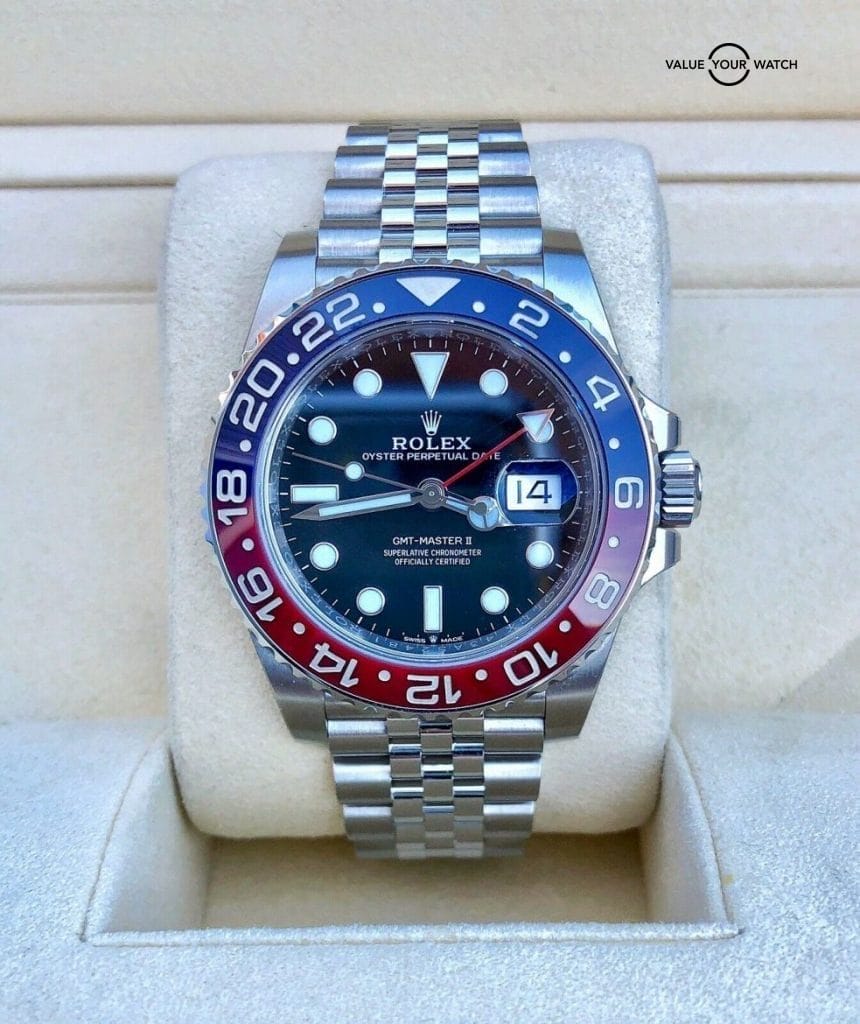
This guide is about two exceptional Rolex watches: the GMT Master and the GMT Master II. Think of them as cool watches that can simultaneously tell time in multiple places! They are like magic clocks for your wrist.
History of GMT Master and GMT Master II
First, let’s talk about when they were made. The GMT Master was the first one to come out in 1955. It was made for pilots flying long distances to see the time in two different places without needing clarification. It has a special hand (like the ones that tell hours and minutes) that shows a second-time zone.
The GMT Master II came out later, in 1982. It’s like the younger sibling but with a cool trick: it can show time in three different places at once! This is because it has a special hand that moves independently, which means you can set it to a different time without messing up the main time.
Rolex GMT Master II Pepsi 126710BLRO 40mm Blue & Red Bezel Jubilee Box & Papers
Sold by The Stellaris Collection
Rolex GMT Master II Pepsi 126710BLRO 40mm Blue & Red Bezel Jubilee Box & Papers
Sold by The Stellaris Collection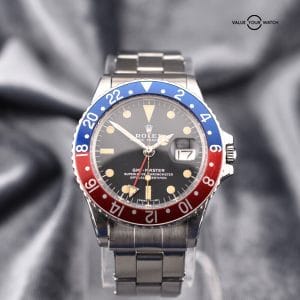
1972 Vintage Rolex GMT-Master, Ref. 1675 with Papers and RSC Card – 3.18M Serial
Sold by Elevated Time Watch Co.
March 2024 White Tag Unworn Rolex GMT Master II Pepsi White Gold Meteorite Dial
Sold by Watch Authority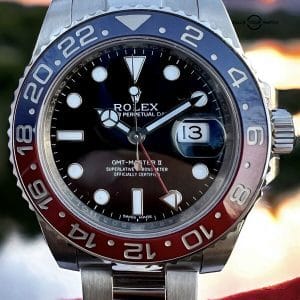
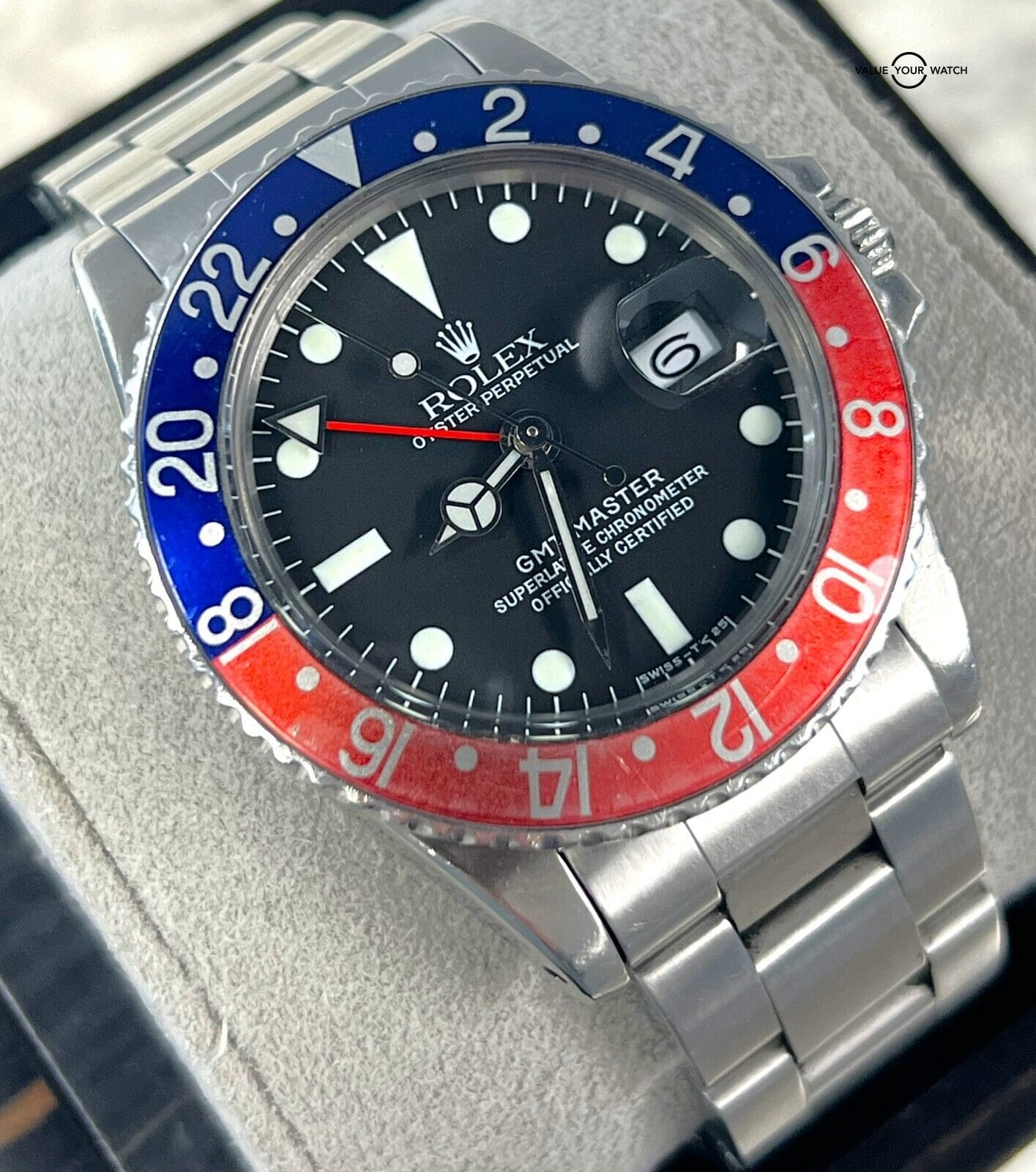
Rolex PEPSI GMT-Master II 116719BLRO WHITE GOLD Oyster Box & Papers
Sold by The Watch Dealer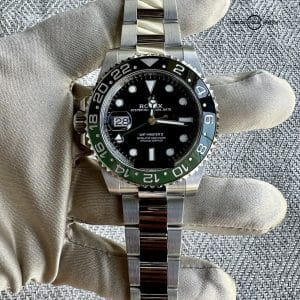
Rolex GMT-Master II 126720VTNR Silver Oyster Bracelet with Black and Green Bezel
Sold by Heritage Watch Dealers

General Overview
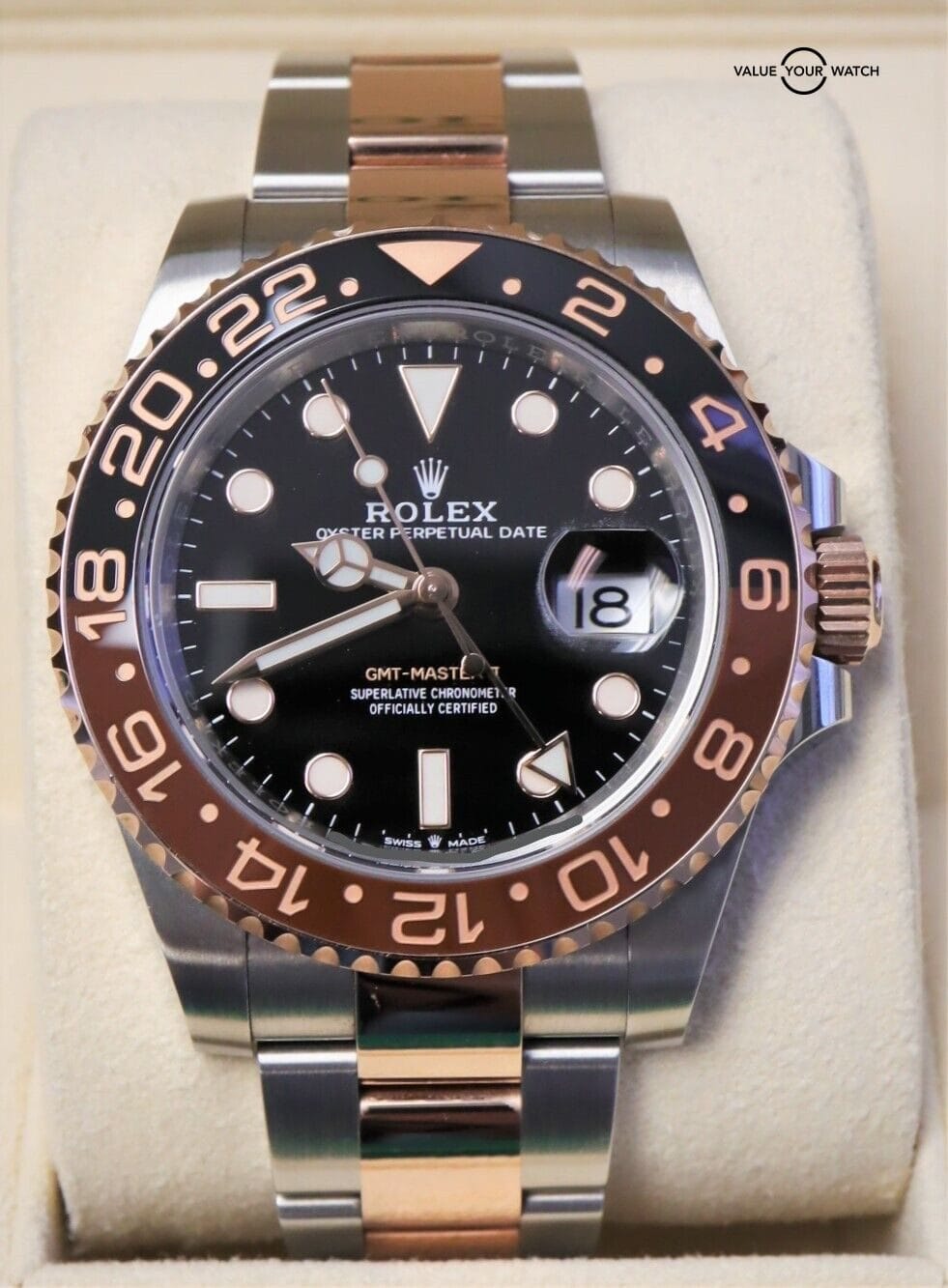
Both watches come in different styles and materials, like stainless steel and gold, and have colorful bezels (the ring around the watch face) that make them look really unique. The GMT Master has some options like black, blue, and a mix called “Pepsi” because it’s red and blue, like the soda logo. The GMT Master II has those and more, including a special black and blue called “Batman.”
The main difference between the two is that the GMT Master shows two times, and the GMT Master II can show three times. Also, the GMT Master II uses newer materials for the bezel that don’t scratch easily and has more fancy versions with gems.
People have given these watches fun nicknames based on their colors, like “Pepsi” for the red and blue bezel and “Batman” for the black and blue one. They’re not just tools; they’re like little pieces of art you can wear.
In the end, Rolex decided to focus on making just the GMT Master II, but both watches are still really popular and special. They tell us about different places and times; wearing one is like carrying a little piece of the world on your wrist.
Let’s gear up for a deeper dive into the intriguing world of Rolex’s GMT Master and GMT Master II watches. We’ve skimmed the surface, learning about their capabilities and the fundamental differences between these two iconic timepieces. Now, it’s time to zoom in and explore the distinctive features, histories, and details that make each model and version stand out.
Our focus will extend to the various materials used in the construction of these watches, from the robust stainless steel to the opulent gold variants and the innovative Cerachrom ceramic bezels introduced with the GMT Master II. We’ll delve into the significance of the bezel colors—each with its own nickname and story, from the “Pepsi” to the “Sprite”—and what these color choices signify for collectors and enthusiasts alike.
Moreover, we’ll examine the functionality distinguishing the GMT Master II from its predecessor, particularly its ability to display three time zones, and how this feature has been received within the watchmaking community and by global travelers.
Rolex GMT-Master Bezel Guide: Types and Dates
Aluminum is favored for watch bezels due to its vintage aesthetic and ability to develop a beautifully faded patina. This characteristic is evident in the discoloration found on vintage Rolex GMT-Masters, Submariners, and Daytonas.
Bakelite, an early form of plastic, is known for its lightweight, durability, and versatility, allowing it to be shaped into countless forms. This material served as an alternative to aluminum for watch bezel inserts, offering a pioneering solution in the watchmaking industry.
A Cerachrom bezel is a special type of bezel used on Rolex watches, made from a proprietary ceramic material developed by Rolex. It’s known for being scratch-resistant and fade-resistant, which contributes to the longevity and durability of the watch, making it an ideal choice for luxury sports watches like the GMT-Master II
| Model Reference | Production Years | Case Material | Bezel Material | Bezel Color Options |
| GMT-Master 6542 | 1955 – 1959 | Stainless Steel | Bakelite | Blue/Red |
| GMT-Master 6542 | 1958 – 1959 | Yellow Gold | Bakelite | Burgundy |
| GMT-Master 1675 | 1959 – 1980 | Stainless Steel | Aluminum | Blue/Red, Black |
| GMT-Master 1675/8 | 1960 – 1980 | Yellow Gold | Aluminum | Brown, Black |
| GMT-Master 1675/3 | 1970 – 1980 | Yellow Gold & Stainless Steel | Aluminum | Brown, Black, Brown/Gold |
| GMT-Master 16750 | 1980 – 1988 | Stainless Steel | Aluminum | Blue/Red, Black |
| GMT-Master 16753 | 1980 – 1988 | Yellow Gold & Stainless Steel | Aluminum | Brown, Black, Brown/Gold |
| GMT-Master 16758 | 1980 – 1988 | Yellow Gold | Aluminum | Brown, Black |
| GMT-Master II 16760 | 1982 – 1988 | Stainless Steel | Aluminum | Black/Red |
| GMT-Master 16700 | 1988 – 1999 | Stainless Steel | Aluminum | Red/Blue, Black |
| GMT-Master II 16718 | 1989 – 2005 | Yellow Gold | Aluminum | Black, Brown |
| GMT-Master II 16713 | 1989 – 2006 | Yellow Gold & Stainless Steel | Aluminum | Brown, Black, Brown/Gold |
| GMT-Master II 16710 | 1989-2007 | Stainless Steel | Aluminum | Red/Blue, Black/Red, Black |
| GMT-Master II 116718 |